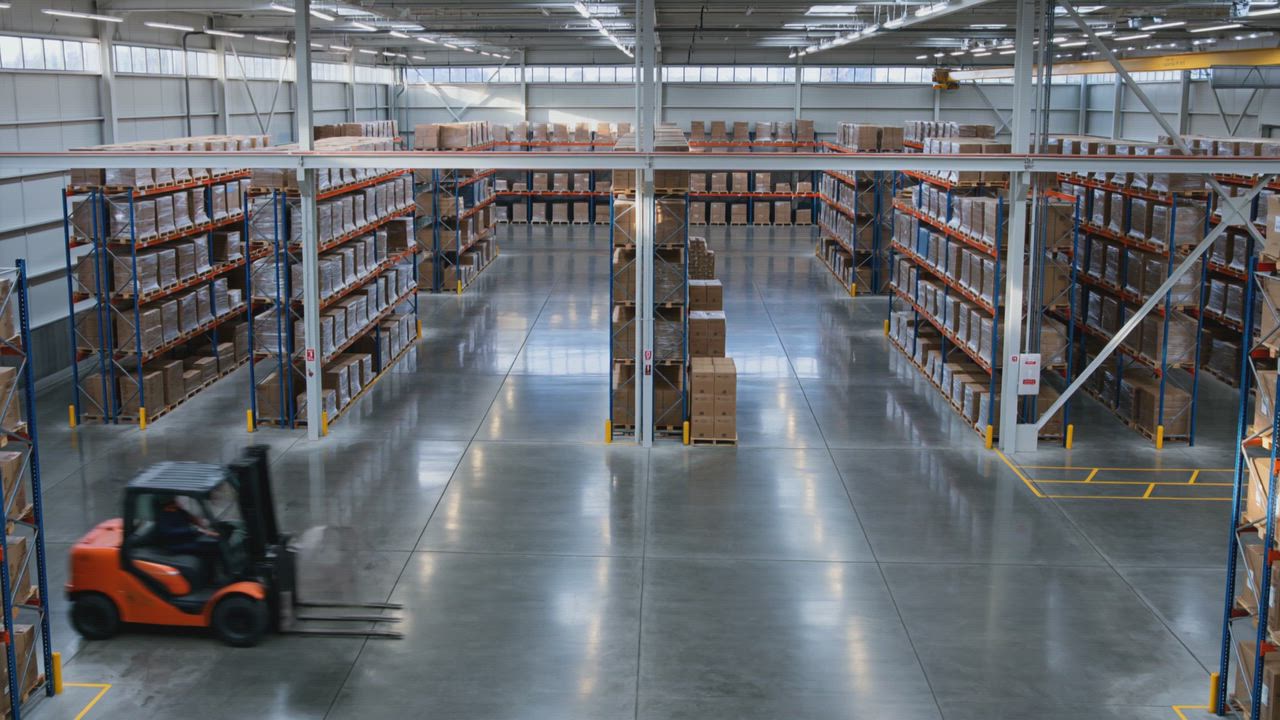
Walk your warehouse and count the pallets nobody has touched in six months. Spare parts, last year's fixtures, discontinued SKUs, stock you have to keep but rarely ship. They sit in racks next to the dock while your fast movers get pushed to the back. A dead storage warehouse setup fixes that by moving slow stock out of prime space and storing it where it can sit safely without slowing anyone down.
FlexSpace Logistics offers warehouse storage for high-volume movement, low-volume movement (dead storage), and anything in between, on month-to-month contracts. Our job is to match each part of your inventory to the setup that fits how often it moves.
What Is a Dead Storage Warehouse?
A dead storage warehouse holds inventory that has to be kept but is rarely accessed. Stock goes in, stays for months or years, and comes out only when it's needed. Active inventory, by contrast, moves every day or week and needs pick faces, dock access, and fast retrieval.
The two need opposite setups:
FlexSpace's own definition is simple: high-volume storage supports inventory that moves frequently, like active fulfilment stock, while low-volume or "dead" storage suits items that need to be kept but aren't accessed often.
Dead Storage Isn't the Same as Dead Stock
Dead storage is a way of storing goods; dead stock is a sales problem. People mix them up, and the mix-up leads to the wrong decision.
Dead stock is inventory with little realistic chance of selling. It usually needs to be discounted, liquidated, returned to the supplier, or written off. Storing it more efficiently only delays that decision.
Dead storage holds stock that still has a job. A manufacturer keeps spare parts for machines it sold years ago. A retailer keeps store fixtures between seasons. A distributor keeps reserve stock it will need, just not this month. This low turnover inventory isn't a mistake; it's an operational requirement.
That's why we ask one question first: will this stock ever leave for a customer or a job? If yes, it belongs in dead storage. If no, it needs a sales or disposal decision, not more space.
How Slow Movers Slow Down the Whole Warehouse
Slow-moving stock slows a warehouse by taking the locations fast movers need. Every pallet of low turnover inventory near the dock pushes an active SKU farther away, and pickers walk the difference on every order.
Canadian distributors carry a lot of stock to begin with. Statistics Canada reported that wholesale inventories rose 1.2% to $140.4 billion in June 2026, and the inventory-to-sales ratio was 1.52. That ratio "measures the time (in months) required to exhaust inventories if sales remain at current levels".
What that means on your floor: an average of about a month and a half of stock is fine when it's all moving. But averages hide the slow end. If your best-sellers turn in two weeks, some other SKUs are sitting for many months to produce that average, and those slow movers are holding prime locations.
The same release shows the biggest increase came from machinery, equipment, and supplies, up 3.9% to $42.9 billion. That category is full of spare parts and components, exactly the stock businesses keep for years and pick rarely.
Signs Your Warehouse Needs a Dead Storage Split
Most warehouses need a dead storage split well before they run out of space. These are the signs we look for when a business tells us it's "full":
- Pickers walk past pallets they never touch. Prime locations near the dock hold stock with no recent picks.
- Receiving backs up. New inbound waits in staging because racks are occupied by long-dwell pallets.
- Stock gets moved twice. Teams shuffle slow pallets to reach fast ones, then put them back.
- Nobody is sure what's in the back rows. Old spare parts, fixtures, and reserve stock lack clear records or an owner.
- You're shopping for a bigger building. The space problem looks permanent, but much of the stock filling it barely moves.
If two or more of these sound familiar, the fix is usually to split the inventory, not to expand the building. Move the slow end out, and your current warehouse often has room again. Our warehouse overflow checklist covers how to confirm the gap first.
How to Decide What Goes to Dead Storage
Decide by movement, not by gut feel. We classify stock by movement frequency, dwell time, business priority, and handling needs before recommending what stays in your main building.
Movement Frequency
Pull a report of picks per SKU over the last 6 to 12 months. Anything picked rarely is a candidate for slow moving inventory storage. Anything picked weekly stays home. SKUs in between often split: keep one pallet on a pick face and move the reserve pallets out.
Dwell Time
Look at how long each pallet has sat in its location. Long-dwell pallets are the clearest candidates, even when the SKU itself sells, because the pallet you're storing isn't the one being picked.
Retrieval Notice
Ask how much warning you get before you need the stock. If a spare part has to ship the same day a machine breaks down, keep a small quantity on site and move the reserve out. If you get a week's notice, all of it can go.
Handling Needs
Some goods need specific conditions. Certain partner facilities are equipped for temperature-sensitive, fragile, or hazardous products, so tell your advisor up front and we'll match you to the right facility.
Racks full of stock nobody picks? Send us your slow-mover list and how often you need access. Talk to FlexSpace about dead storage.
What a Long-Term Inventory Storage Setup Looks Like
Long term inventory storage trades pick speed for density, security, and accurate records. The setup looks different from your main warehouse on purpose.
- Scheduled access. Warehouse and co-warehousing facilities may operate on scheduled access, which suits stock you retrieve with notice. Confirm the access hours at your location before you move in.
- Private or shared space. FlexSpace offers both private warehousing and shared warehouse space, so you can choose based on volume and how separate you want your stock kept.
- Clear records. Every pallet needs a location and an owner on your team who requests retrievals. Dead storage fails when nobody remembers what's in it.
- Month-to-month terms. You can scale the space up or down as stock comes in or leaves, without a long-term lease.
- Retrieval rules. Agree how much notice your team gives, who can request stock, and how pallets travel back to your main building. A retrieval that takes a day is fine when everyone knows it takes a day.
- A regular review. Check the dead storage list every quarter. Stock that hasn't moved in a year may have become dead stock and needs a sale or disposal decision.
For physical files and archives, our records storage works the same way: indexed, climate-controlled, and retrieved on demand.
Off-Site Inventory Storage for Smaller Businesses
Smaller businesses can outsource small inventory storage too. Off-site inventory storage doesn't have to mean a whole warehouse.
- Self storage from 50 sq ft: business self storage with drive-up access, extended hours, and month-to-month terms, for a few pallets or cartons.
- Co-warehousing from 500 sq ft: shared warehouse space from 500 to 25,000 sq ft, with real operations support, for businesses that have outgrown a unit.
If you're not sure which fits, our post on how we match businesses to warehouse storage walks through the questions we ask.
How FlexSpace Sets Up Dead Storage
FlexSpace gets businesses from first call to racked and stored, often inside two weeks.
- 15-minute discovery call. We work out pallet count, goods type, and how often you'll need in-and-out access.
- Live walkthrough. We check our internal facilities first, then our partner network, and show you the racking and bay sizes that fit.
- Customer Success Manager takes over. Your manager handles inventory intake, racking setup, and the first invoice.
Free Up Your Warehouse With Dead Storage
A dead storage warehouse setup gives slow stock a safe, organized home and gives your main building back to the inventory that pays for it. FlexSpace stores both active and low-volume inventory on month-to-month terms across 541 locations in Canada.
Bring your slow-mover list, the pallet count, and how often you'll need access. Move your slow-moving stock with FlexSpace, or learn more about FlexSpace Logistics.