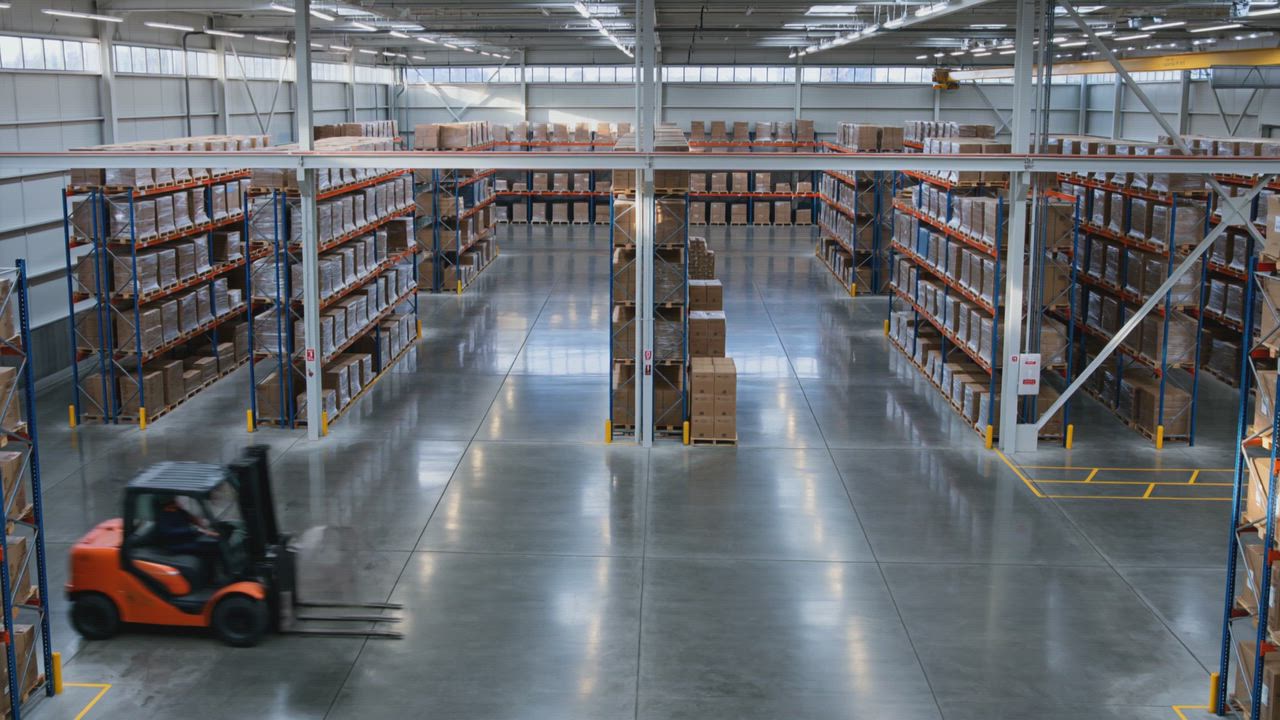
Dead Storage vs Active Inventory: Why Slow-Moving Stock Needs a Different Setup

Dead storage relocates low-turnover inventory to off-site warehousing, freeing prime space near docks for fast-moving goods and boosting daily picking efficiency without long-term leases.

Walk your warehouse and count the pallets nobody has touched in six months. Spare parts, last year's fixtures, discontinued SKUs, stock you have to keep but rarely ship. They sit in racks next to the dock while your fast movers get pushed to the back. A dead storage warehouse setup fixes that by moving slow stock out of prime space and storing it where it can sit safely without slowing anyone down.

FlexSpace Logistics offers warehouse storage for high-volume movement, low-volume movement (dead storage), and anything in between, on month-to-month contracts. Our job is to match each part of your inventory to the setup that fits how often it moves.

What Is a Dead Storage Warehouse?

A dead storage warehouse holds inventory that has to be kept but is rarely accessed. Stock goes in, stays for months or years, and comes out only when it's needed. Active inventory, by contrast, moves every day or week and needs pick faces, dock access, and fast retrieval.

The two need opposite setups:

Active inventory Dead storage
How often it moves Daily or weekly Rarely; months between touches
Where it belongs Near docks and pick faces Deeper racks, off-site, or bulk storage
Access On demand Scheduled, with notice
What matters most Speed of picking Security, condition, and accurate records
Typical contents Best-sellers, current orders Spare parts, reserve stock, seasonal fixtures, discontinued lines

FlexSpace's own definition is simple: high-volume storage supports inventory that moves frequently, like active fulfilment stock, while low-volume or "dead" storage suits items that need to be kept but aren't accessed often.

Dead Storage Isn't the Same as Dead Stock

Dead storage is a way of storing goods; dead stock is a sales problem. People mix them up, and the mix-up leads to the wrong decision.

Dead stock is inventory with little realistic chance of selling. It usually needs to be discounted, liquidated, returned to the supplier, or written off. Storing it more efficiently only delays that decision.

Dead storage holds stock that still has a job. A manufacturer keeps spare parts for machines it sold years ago. A retailer keeps store fixtures between seasons. A distributor keeps reserve stock it will need, just not this month. This low turnover inventory isn't a mistake; it's an operational requirement.

That's why we ask one question first: will this stock ever leave for a customer or a job? If yes, it belongs in dead storage. If no, it needs a sales or disposal decision, not more space.

How Slow Movers Slow Down the Whole Warehouse

Slow-moving stock slows a warehouse by taking the locations fast movers need. Every pallet of low turnover inventory near the dock pushes an active SKU farther away, and pickers walk the difference on every order.

Canadian distributors carry a lot of stock to begin with. Statistics Canada reported that wholesale inventories rose 1.2% to $140.4 billion in June 2026, and the inventory-to-sales ratio was 1.52. That ratio "measures the time (in months) required to exhaust inventories if sales remain at current levels".

What that means on your floor: an average of about a month and a half of stock is fine when it's all moving. But averages hide the slow end. If your best-sellers turn in two weeks, some other SKUs are sitting for many months to produce that average, and those slow movers are holding prime locations.

The same release shows the biggest increase came from machinery, equipment, and supplies, up 3.9% to $42.9 billion. That category is full of spare parts and components, exactly the stock businesses keep for years and pick rarely.

Signs Your Warehouse Needs a Dead Storage Split

Most warehouses need a dead storage split well before they run out of space. These are the signs we look for when a business tells us it's "full":

  • Pickers walk past pallets they never touch. Prime locations near the dock hold stock with no recent picks.
  • Receiving backs up. New inbound waits in staging because racks are occupied by long-dwell pallets.
  • Stock gets moved twice. Teams shuffle slow pallets to reach fast ones, then put them back.
  • Nobody is sure what's in the back rows. Old spare parts, fixtures, and reserve stock lack clear records or an owner.
  • You're shopping for a bigger building. The space problem looks permanent, but much of the stock filling it barely moves.

If two or more of these sound familiar, the fix is usually to split the inventory, not to expand the building. Move the slow end out, and your current warehouse often has room again. Our warehouse overflow checklist covers how to confirm the gap first.

How to Decide What Goes to Dead Storage

Decide by movement, not by gut feel. We classify stock by movement frequency, dwell time, business priority, and handling needs before recommending what stays in your main building.

‍

Movement Frequency

Pull a report of picks per SKU over the last 6 to 12 months. Anything picked rarely is a candidate for slow moving inventory storage. Anything picked weekly stays home. SKUs in between often split: keep one pallet on a pick face and move the reserve pallets out.

‍

Dwell Time

Look at how long each pallet has sat in its location. Long-dwell pallets are the clearest candidates, even when the SKU itself sells, because the pallet you're storing isn't the one being picked.

‍

Retrieval Notice

Ask how much warning you get before you need the stock. If a spare part has to ship the same day a machine breaks down, keep a small quantity on site and move the reserve out. If you get a week's notice, all of it can go.

‍

Handling Needs

Some goods need specific conditions. Certain partner facilities are equipped for temperature-sensitive, fragile, or hazardous products, so tell your advisor up front and we'll match you to the right facility.

Racks full of stock nobody picks? Send us your slow-mover list and how often you need access. Talk to FlexSpace about dead storage.

What a Long-Term Inventory Storage Setup Looks Like

Long term inventory storage trades pick speed for density, security, and accurate records. The setup looks different from your main warehouse on purpose.

  • Scheduled access. Warehouse and co-warehousing facilities may operate on scheduled access, which suits stock you retrieve with notice. Confirm the access hours at your location before you move in.
  • Private or shared space. FlexSpace offers both private warehousing and shared warehouse space, so you can choose based on volume and how separate you want your stock kept.
  • Clear records. Every pallet needs a location and an owner on your team who requests retrievals. Dead storage fails when nobody remembers what's in it.
  • Month-to-month terms. You can scale the space up or down as stock comes in or leaves, without a long-term lease.
  • Retrieval rules. Agree how much notice your team gives, who can request stock, and how pallets travel back to your main building. A retrieval that takes a day is fine when everyone knows it takes a day.
  • A regular review. Check the dead storage list every quarter. Stock that hasn't moved in a year may have become dead stock and needs a sale or disposal decision.

For physical files and archives, our records storage works the same way: indexed, climate-controlled, and retrieved on demand.

Off-Site Inventory Storage for Smaller Businesses

Smaller businesses can outsource small inventory storage too. Off-site inventory storage doesn't have to mean a whole warehouse.

  • Self storage from 50 sq ft: business self storage with drive-up access, extended hours, and month-to-month terms, for a few pallets or cartons.
  • Co-warehousing from 500 sq ft: shared warehouse space from 500 to 25,000 sq ft, with real operations support, for businesses that have outgrown a unit.

If you're not sure which fits, our post on how we match businesses to warehouse storage walks through the questions we ask.

How FlexSpace Sets Up Dead Storage

FlexSpace gets businesses from first call to racked and stored, often inside two weeks.

  1. 15-minute discovery call. We work out pallet count, goods type, and how often you'll need in-and-out access.
  2. Live walkthrough. We check our internal facilities first, then our partner network, and show you the racking and bay sizes that fit.
  3. Customer Success Manager takes over. Your manager handles inventory intake, racking setup, and the first invoice.

Free Up Your Warehouse With Dead Storage

A dead storage warehouse setup gives slow stock a safe, organized home and gives your main building back to the inventory that pays for it. FlexSpace stores both active and low-volume inventory on month-to-month terms across 541 locations in Canada.

Bring your slow-mover list, the pallet count, and how often you'll need access. Move your slow-moving stock with FlexSpace, or learn more about FlexSpace Logistics.


Frequently Asked Questions

Everything you need to know about co-warehousing with FlexSpace.

Real questions, straight answers. Everything you need to make the right call on your storage space.
FlexSpace offers fully managed returns processing along with real-time inventory tracking, lot tracking, and FIFO/FEFO fulfilment rules, so you always know what's in stock and nothing gets over- or under-ordered.
Our fulfilment centres support Direct-to-Consumer orders through storefront integrations as well as B2B and wholesale fulfilment, so you don't need separate providers for each channel.
FlexSpace uses Mintsoft, a leading fulfilment platform, to manage order processing across your sales channels. It integrates with common storefront platforms so orders flow in and are fulfilled without manual work on your end.
FlexSpace can handle both one-off shipments and ongoing freight needs. Whether you need a single LTL shipment or a recurring FTL schedule, we tailor a transportation solution around your shipping volume and frequency.
FlexSpace works with trusted carrier partners and proven processes to protect your goods from pickup to delivery. With thousands of shipments completed, we know how to navigate the risks that come with moving freight.
LTL (Less-Than-Truckload) is ideal when your shipment doesn't require a full trailer, letting you share space and cost with other shipments. FTL (Full-Truckload) is best when you have enough volume to fill a trailer on your own, offering more direct and often faster transit.
FlexSpace offers both private warehousing and shared warehousing space. You can choose a private warehousing space or a shared option depending on your needs and budget. Our advisors can help you decide which setup makes the most sense for your business.
High-volume storage supports inventory that moves frequently, like active fulfilment stock, while low-volume or "dead" storage is better suited for items that need to be kept but aren't accessed often. We offer both, plus everything in between.
Warehousing space can be scaled up or down as your business needs change . Our warehouse storage runs on flexible, month-to-month contracts, so you can right-size your space as your inventory or business needs shift, without being locked into a long-term lease.
FlexSpace's portable storage units are waterproof. Our partners containers are built to withstand various weather conditions, so your belongings stay safe and protected whether they're in transit or sitting on your property.
We offer a variety of container sizes to fit different needs, from small overflow storage to larger units for renovation or construction projects. Let us know what you're storing and we'll recommend the right size.
FlexSpace can deliver storage containers to custom locations. We deliver the portable container directly to your site, whether that's a job site, your home, or your place of business, and pick it up when you're finished.
Our records management system is designed for fast, organized retrieval. Reach out to your FlexSpace advisor with what you need, and we'll help get it to you promptly.
Both physical and digital records can be stored. We provide solutions for physical document storage as well as digital records management, using advanced records management software to keep everything organized and easy to retrieve.
FlexSpace's records storage partners are compliant with the Canadian legal retention requirements. Businesses are typically required to retain documents for 7 years, and our records management solutions, delivered through our sister company RecordXPress, are built to help you meet that requirement without added stress.
No long-term contract is required for FlexSpaces outdoor parking. Like our other storage solutions, outdoor parking is available with flexible, month-to-month terms so you only pay for the space and time you need.
Our outdoor storage facilities are well-lit, fenced, and monitored by surveillance cameras, so your vehicles and equipment stay protected around the clock.
Our outdoor storage accommodates RVs, trailers, cars, fleet vehicles, construction equipment, and more. If you have something specific in mind, let us know and we'll confirm it fits.
Layouts, loading, and features can be customized to fit your needs. Built-to-suit projects are designed around your specifications, including layout, loading docks, access points, and security features, so the finished space works the way your business actually operates.
Timelines vary depending on the scope and complexity of the build. Once you share your requirements, a FlexSpace advisor will walk you through a realistic timeline for your project.
Built to suit means we work with you to design and develop a space built specifically around your business's operational needs, rather than fitting your business into an existing space.
Availability varies by region and changes often. Contact a FlexSpace advisor with your location and space requirements, and we'll let you know what's available across our network.
FlexSpaces land-for-lease options are secure. Our sites feature security measures such as fencing, lighting, and surveillance, so you can feel confident your assets and equipment are protected
Our land-for-lease options are commonly used for outdoor storage, vehicle and fleet parking, equipment yards, and other business needs that require open, secure space rather than an enclosed building.
Commercial leases can be combined with other FlexSpace services. Many clients pair a commercial lease with our storage, logistics, or fulfilment solutions so everything runs through a single, reliable partner instead of multiple vendors.
Our commercial leases follow standard industry terms, usually ranging from 1 to 5+ years depending on the property and landlord. A FlexSpace advisor can walk you through the specific terms available for a space that fits your needs.
We have access to a wide range of commercial space across our 530+ locations nationwide, from smaller units for growing businesses to large-scale facilities. Tell us your requirements and we'll find a fit.
FlexSpace is happy to support last mile delivery for both B2B and B2C. Whether you're delivering to individual consumers or business customers, we coordinate the most cost-effective and timely solution to get your products where they need to go.
FlexSpace can accommodate special touches like gift packaging or cards. We can add a personal touch to your last-mile deliveries, such as branded packaging, inserts, or thank-you notes, to help create a great unboxing experience for your customers.
Last-mile delivery is the final leg of getting your product to your customer's door. It's often the most visible part of the experience for your end customer, so we handle it with speed, care, and attention to detail.
Cross-border pricing depends on distance, cargo type, and border requirements. Request a free quote and one of our advisors will give you a clear, custom price for your specific shipment.
Our team and carrier partners are familiar with the paperwork and requirements involved in cross-border freight and can help guide you through what's needed so your shipment isn't held up at the border.
FlexSpace can handle shipments crossing from Canada into the USA. Our carrier network includes partners experienced in cross-border freight, helping your goods move smoothly between Canada and the U.S. without unnecessary delays.
To get started with a quote for a non-standard shipment just give us a call or fill out our online quote form with details about your cargo — size, weight, handling needs, and destination. One of our advisors will match you with the right equipment and carrier for the job.
Our drivers have experience with oversized and heavy freights. We partner with experienced drivers and carriers who use the right specialized equipment for the job, from flatbeds to climate-controlled trailers, so your cargo is handled safely from pickup to delivery.
Anything that can't move on a standard truck is categorized as a 'specialized' shipment — think oversized equipment, heavy machinery, temperature-sensitive goods, or delicate and unusually shaped items. If your load has unique handling requirements, our specialized trucking team can help.
No minimum shipment size is required for our long haul trucking service. We work with businesses of all sizes and can scale our support as your shipping needs grow. Speak with a FlexSpace advisor to find the right fit for your volume.
Our carrier partners plan routes with contingencies in mind and communicate proactively if conditions change. You'll always know the status of your shipment, and we'll work quickly to minimize any impact on your delivery timeline.
Our long haul network covers local, regional, and cross-country routes throughout Canada. Whether you're moving product between provinces or across the country, our carrier partners have the coverage and experience to get it there reliably.
You can request a quote through our Get a Quote page, contact us directly by phone or email, or use our on-site live chat. One of our advisors will gather your requirements and put together a custom quote for you.
Our advisors are available during standard business hours, Monday to Friday. You can also reach us by email or through our website contact form at any time and we will get back to you promptly.
FlexSpace Logistics operates across Canada with a growing network of storage, warehousing, and logistics partners. Whether you are in a major metro or a smaller market, we can likely help. Check our Locations page or contact an advisor to confirm service availability in your area.
We market FlexSpace Logistics as a single network across Canada, then match incoming customer requests to the best-fit partner based on location, capacity, and service type. Partners benefit from our sales and marketing efforts without having to manage their own lead generation.
There is no upfront fee to apply. Our partnerships team will discuss the revenue-sharing model and any applicable terms during the onboarding conversation. Visit our Become a Partner page to get started.
Requirements vary by service category, but generally we look for partners with insured, compliant facilities or vehicles, a track record of reliable service, and the capacity to take on new clients. Our partnerships team will walk you through the onboarding process.
We welcome partners across the storage and logistics spectrum including self storage operators, warehouse owners, transportation carriers, and 3PL providers. If you have capacity and want to connect with more customers, FlexSpace Logistics can help fill your space and grow your business.
If you operate a storage facility, warehouse, or logistics business and want to join our network, we would love to hear from you. Visit our Become a Partner page to submit your information and a member of our partnerships team will follow up with you.
Yes. We work with partners who specialize in moving oversized, heavy, or unusual freight that standard carriers cannot accommodate. This includes flatbed, lowboy, and other specialized equipment. Contact us with your freight details and we will put together the right solution.
Tracking capabilities depend on the carrier and service level selected. In most cases you will receive a tracking number once your shipment is picked up. For real-time visibility or custom tracking integrations, speak with your FlexSpace Logistics advisor about available options.
LTL (Less Than Truckload) is used when your shipment does not fill an entire truck. You share trailer space with other shippers and pay only for what you use. FTL (Full Truckload) means you book the entire truck, which is better for large or time-sensitive loads. Our logistics team can recommend the right option based on your shipment size and timeline.
Fulfilment turnaround times depend on your service agreement and the specific facility, but most orders are picked, packed, and shipped within one to two business days of being placed. Speak with your advisor to set up SLAs that match your customers expectations.
Our fulfilment partners support a wide range of sales channels including Shopify, Amazon, WooCommerce, and direct-to-consumer orders. If you sell on a platform not listed here, reach out and we will confirm compatibility.
Yes. We offer reverse logistics support as part of our fulfilment services. Returned items can be received, inspected, and either restocked or flagged for disposal based on your instructions. Ask your advisor about adding returns handling to your fulfilment plan.
Certain partner facilities are equipped for temperature-sensitive or specialized products. If your inventory has specific handling requirements, let your advisor know upfront so we can match you with the right facility.
3PL (third-party logistics) fulfilment means we store your inventory and handle picking, packing, and shipping orders on your behalf. When a customer places an order, our fulfilment team processes it and gets it out the door so you do not have to manage a warehouse or fulfilment team yourself.
Retrieval processes vary by partner facility, but most offer same-day or next-day access to stored files. Some locations also offer digital retrieval, where documents are scanned and delivered electronically. Ask your advisor about retrieval options at your location.
Records storage is a secure, organized solution for storing physical documents, files, and archives. Beyond storage, our partners offer document management services including retrieval, scanning, shredding, and retention scheduling so your records are easy to find and compliant with retention requirements.
We arrange delivery of the container to your location, where it stays for as long as you need. When you are done, we pick it up or move it to a secure facility for longer-term storage. Contact us to arrange delivery in your area.
Portable storage containers are great for business equipment, seasonal inventory, renovation overflow, and on-site project materials. The container comes to you, so you can load at your own pace.
Yes. Our partner outdoor storage facilities are fenced, monitored, and access-controlled. Security features vary by location, so ask your advisor about the specific setup at the facility you are considering.
Outdoor parking storage is ideal for vehicles, trailers, RVs, heavy equipment, containers, and oversized items that do not fit indoors. Our partner locations offer secure, fenced outdoor yards with varying levels of access and security.
Yes. Self storage is available on flexible month-to-month terms, so you can use it for as long or as short as your business needs. There is no pressure to commit to a fixed contract.
Absolutely. Many of our self storage clients use their units for business inventory, equipment, supplies, and seasonal stock. It is a flexible, cost-effective option for businesses that do not need a full warehouse.
We offer a range of unit sizes to suit different needs, from small lockers for a few boxes to large units that can hold the contents of a commercial space. Contact us or use our Get a Quote tool to find the right size for what you are storing.
Co-warehousing is a great fit if you are a small to mid-sized business that needs professional warehouse space without a long-term lease commitment. It is especially popular with e-commerce sellers, importers, and seasonal businesses. Talk to one of our advisors and we will help you figure out if it is the right move.
Yes. Co-warehousing facilities have loading docks and receiving areas designed to handle inbound and outbound freight. Your business can use the facility address for shipments, and staff can assist with receiving depending on the service level you choose.
Co-warehousing memberships typically include your allocated floor space, shared loading dock access, common area maintenance, utilities, and basic security. Depending on the location, additional services like pallet racking, receiving support, and Wi-Fi may also be included. Ask your advisor for the full list at your specific location.
Co-warehousing is a shared warehouse model where multiple businesses split the cost of a larger facility, giving you access to professional warehouse infrastructure without committing to a full lease. It is ideal for growing businesses that need more than self storage but are not ready for a dedicated warehouse.
Certain partner facilities are equipped for temperature-sensitive or specialized products. If your inventory has specific handling requirements such as refrigeration, fragile items, or hazardous materials, let your advisor know upfront so we can match you with the right facility.
We strongly recommend that all clients carry their own cargo and inventory insurance. While our partner facilities maintain standard property coverage, it may not extend to your specific goods. Speak with one of our advisors to understand your options.
Access policies vary by storage type and location. Self storage units typically offer flexible access hours, while warehouse and co-warehousing facilities may operate on scheduled access. Contact our team to confirm access hours at your specific location.
We offer a range of storage options including self storage, warehouse storage, co-warehousing, portable storage, outdoor and parking storage, records storage, and land for lease. Our advisors can help you find the right fit for your business needs and budget.
It is easy. One of our FlexSpace Logistics advisors will work with you to ensure you have the right storage space and solutions for your business. Once we confirm your details, you are ready to start storing and shipping. We can also provide a quote through our Get a Quote page or in real time through our on-site live chat.
Get in touch with us if you need to make any changes to your services. One of our friendly FlexSpace Logistics advisors will make changes for you anytime during standard business hours. You can email us or call us anytime. We are happy to help.
Absolutely. We provide logistics services to move your products anywhere across Canada or internationally. Our partners have the certifications and expertise required to prepare items for international shipping. We will take care of all the details so that you dont have to. Talk to one of our FlexSpace Logistics advisors for more details.
No. FlexSpace Logistics offers comprehensive inventory storage and logistics solutions no matter where you are in Canada. We deliver on the Last Mile with care and expertise so you can focus on the aspects of your business that matter most.
Yes. We provide an inventory management software that allows you to effectively manage your inventory in real time, whether you are at your desk or on the go. Our inventory management partner has the tools and expertise to handle thousands of products and transactions from your laptop, tablet, or smartphone. Contact one of our FlexSpace Logistics advisors for more details.
Never. We know how painful it can be to receive a bill for unexpected fees, so our inventory storage pricing is all inclusive. There are no hidden fees. Space, maintenance, tax, and utilities are included in the quoted cost. Heating, cooling, frozen storage, temperature-controlled storage its all included in the price.
Our space can hold as little as 25 square feet and as much as several thousand. We have inventory storage solutions for small to mid-sized businesses all across Canada. One of our FlexSpace Logistics advisors will help you find the location that is right for your business.
No, you can scale up or down within our space on month-to-month contracts. Our network of storage space and warehouses offer flexibility for you to right-size your space as your business changes. Speak with one of our FlexSpace Logistics advisors for more details.
Ready to get started?
Find the right solution for your business.
Straightforward pricing, flexible terms, and real support - wherever you are in Canada.
Get my free quote