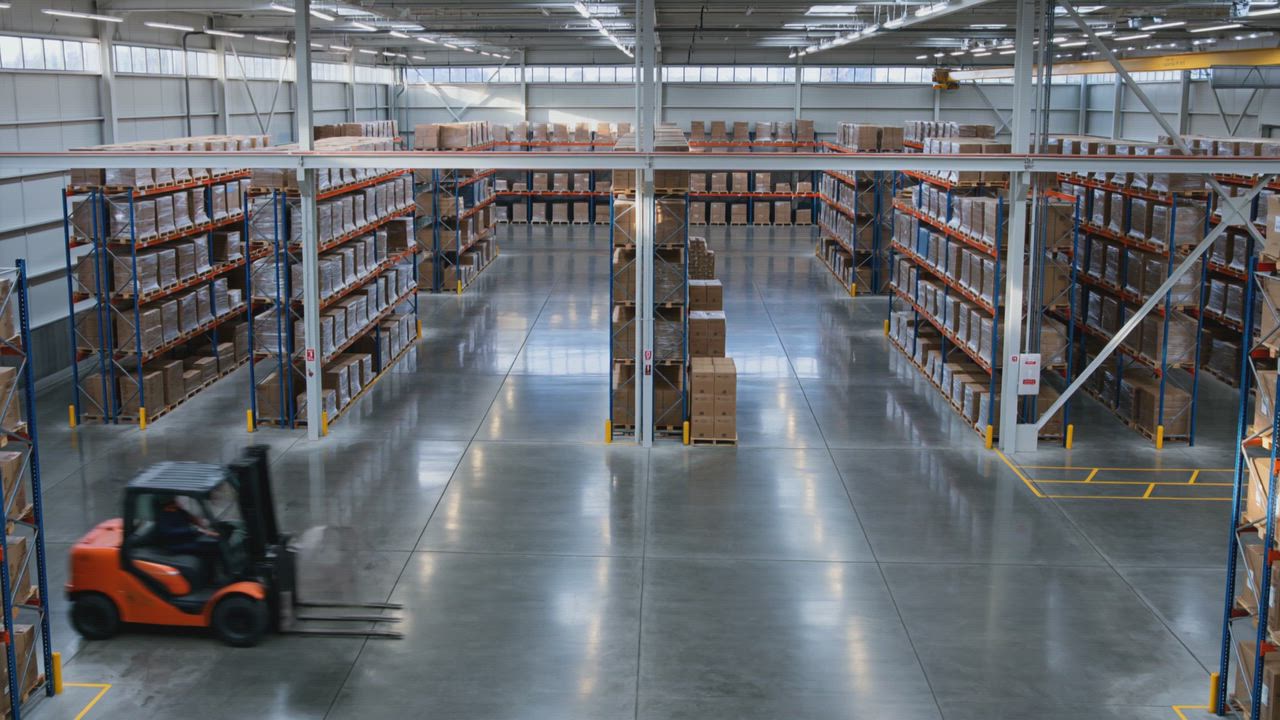
Your fall purchase orders landed early, the receiving dock is full, and pallets are sitting in aisles your pickers need in November. You need more room for about three months, not a five-year lease. Seasonal inventory storage solves exactly that: short-term space for peak stock, sized to the peak and released when it's over.
FlexSpace Logistics sets up flexible storage for Canadian businesses on month-to-month terms, from 50 sq ft to more than 1 million sq ft, across 541 locations. Our process takes a business from first call to racked and stored, often inside two weeks. This guide is the action plan we walk clients through each fall: how to size the overflow, which storage format fits, what the two weeks look like, and how to get out cleanly in January.
What Is Seasonal Inventory Storage?
Seasonal inventory storage is short-term space that holds the extra stock a business carries before and during its busiest season, then shrinks or ends when demand drops. It sits outside the main warehouse, so the primary building keeps working at normal speed while the peak stock waits nearby.
For most of our clients, the season is Q4. Retailers and e-commerce brands bring in holiday stock in September and October. Importers receive several weeks of product in one container wave. Distributors stage promotional inventory ahead of Black Friday. In each case, the extra stock is real but temporary.
Seasonal storage is different from a permanent expansion in three ways:
- Duration: it's planned around a peak, usually weeks or a few months, not years.
- Commitment: it runs on flexible terms, so you can scale down as stock sells through.
- Inventory role: it holds reserve stock, not the fast-moving SKUs your team picks every hour.
That last point matters most. Overflow works when it has a defined job. We classify stock by movement frequency, dwell time, business priority, and handling needs before recommending what should stay in the primary facility and what can move out.
Why Q4 Overflow Space Gets Harder to Find Every Fall
Q4 overflow space gets harder to find because the peak is concentrated and the market around it is tight. Many businesses look for space in the same six weeks, in the same cities, for the same reason.
The demand spike is well documented. Statistics Canada reported that "approximately one-quarter of retail e-commerce sales took place during the 2018 holiday shopping season", the two months of November and December. A quarter of a year's online sales in two months means inventory has to arrive before those weeks, and it has to sit somewhere.
Industrial space around Toronto has also stayed tight. Colliers reported that GTA industrial vacancy fell to 2.2% by Q2 2026, down from 2.9% in the second half of 2025. CBRE's Q3 2026 figures show the GTA absorbed 2.0 million sq. ft. of industrial space in the quarter, its fifth straight quarter of positive net absorption.
What that means for your Q4: businesses keep taking space, and little of it sits empty waiting for a short-term tenant. A traditional industrial lease also isn't built for a three-month peak. That's why we start every overflow search inside a network of facilities that already run month-to-month, instead of hunting for a vacant building.
How to Size Your Q4 Overflow Before You Call
You size Q4 overflow by working out how much stock will sit outside the main warehouse at the peak, how often you need to reach it, and when it will leave. Four numbers cover most of it, and having them ready makes the first call short and the quote accurate.
If you're not yet sure the problem is space at all, start with our warehouse overflow checklist. It covers how to tell a real capacity gap from a process bottleneck. This section assumes the gap is real.
1. Count the Peak, Not the Average
Plan for the highest point your stock will reach, not the monthly average. Compare your current inventory with confirmed inbound loads, expected outbound demand, promotion dates, and supplier lead times. The gap between what your building holds and what will arrive is your overflow.
Express it in the unit the space will be measured in:
- Pallets for racked warehouse storage and co-warehousing.
- Square feet for shared floor space and self storage units.
- Container loads for portable storage on your own site.
2. Separate Reserve Stock From Active Stock
Not every pallet belongs in overflow. Fast pickers, items tied to same-day orders, and anything production depends on should stay close. Reserve stock, seasonal goods, unopened case or pallet quantities, and long-dwell materials are the strongest candidates to move out.
Moving a random group of pallets is the most common mistake we see. It splits related SKUs across two buildings, adds travel, and makes urgent items harder to retrieve during the busiest weeks of the year.
3. Decide How Often You Need Access
Access frequency drives the format more than size does. Weekly replenishment from overflow to your main building calls for dock access and receiving support. Pulling a few cartons a week works from a drive-up unit. Stock you won't touch until it ships can go almost anywhere secure.
Write the access plan down before you choose space. Note who will pull stock, how much notice they can give, whether they need a dock or a door, and the hours they work. A team that replenishes every Tuesday and Friday needs a different setup from one that pulls a single pallet whenever a wholesale order lands. Those details decide whether your overflow saves time or adds a daily drive.
4. Set the Exit Trigger Now
An exit trigger tells everyone when the overflow ends. It can be a date, a target pallet count, a sell-through level, or the arrival of permanent space. Without one, temporary inventory storage quietly becomes a fixed cost. With one, your team knows when to release capacity, extend the plan, or reassess.
Which Overflow Format Fits Your Q4 Peak?
The right overflow format depends on volume, access frequency, and whether the stock needs warehouse handling. FlexSpace offers four storage formats that cover most Q4 peaks, and we point clients to the one that matches what they're storing, not to whatever space is free.
Co-Warehousing: Shared Space With an Operations Layer
Co-warehousing gives you space inside a shared, professionally run warehouse, from 500 to 25,000 sq ft across our core markets. You get shared infrastructure, real operations support, and month-to-month terms. It's best for companies that have outgrown self storage but aren't ready for a dedicated facility, and it's popular with e-commerce sellers, importers, and seasonal businesses.
Choose it when your overflow is a few hundred pallets or less and you need regular movement in and out.
Warehouse Storage: Racked Pallets at Volume
Warehouse storage is short term warehouse storage at scale: racked pallet space in a dedicated area, with intake and racking handled for you. It handles high-volume movement, low-volume movement, and anything in between. Our warehouse space runs on month-to-month contracts, so you can right-size as inventory shifts.
Choose it when the peak is large, palletized, and needs proper receiving.
Self Storage: Small Volumes, Drive-Up Access
Self storage for business starts at 50 sq ft, with drive-up access, extended hours, and month-to-month terms. Many of our self storage clients use their units for business inventory, equipment, supplies, and seasonal stock.
Choose it when the overflow fits in a unit and your own team will load and pull stock.
Portable Storage: Overflow on Your Own Lot
Portable storage brings a container to your site. You load it on your timeline, and our horizontal loading system means no tilting, so your stock stays put. Keep it on-site for easy access or have it moved to a secure facility.
Choose it when you have yard space and want the overflow steps from your loading door.
Compare the Four Formats
For trailers and fleet vehicles crowding the yard during peak, outdoor parking storage also runs month-to-month, with no long-term contract.
Not sure which one fits? Tell us your pallet count, goods type, and how often you need access. A FlexSpace advisor will recommend a format on a 15-minute call. Talk to our team.
When Should You Book Q4 Overflow Space?
Book Q4 overflow space as soon as your fall purchase orders are confirmed, usually in August or September. That leaves room for the two-week setup before October receiving, with time to adjust if a container arrives early.
Working back from the peak keeps the plan realistic. This is the calendar we use with most retail, e-commerce, and import clients:
Businesses with a different peak shift the same calendar. A garden-supply distributor peaks in spring, and a back-to-school brand peaks in August, but the order of the steps doesn't change: confirm, size, book, receive, replenish, exit.
If you're reading this in October, you're not too late. Two weeks from first call still puts stock in racks before Black Friday. Call before you size everything perfectly, and bring the numbers you have.
The Two-Week Timeline: From First Call to Racked and Stored
FlexSpace gets most businesses from first call to racked and stored, often inside two weeks. The process has three steps, and each one has a clear owner.
Step 1: A 15-Minute Discovery Call
The first call takes about 15 minutes. We work out how much space you need, what kind of goods you're storing, your pallet count, and how often you'll need in-and-out access. The four numbers from the sizing section above make this call fast.
Step 2: A Live Walkthrough of Your Options
We look at our internal facilities first. If none is the right fit, we go to our vetted partner network. You get a live walkthrough of the options that match your stock, location, and access needs, so you compare real spaces, not a brochure.
Every location in the network is screened for security, condition, access, and reliable terms, from single self storage units to full warehouses and outdoor yards.
Step 3: Your Customer Success Manager Takes Over
Once you sign, a dedicated Customer Success Manager runs the move-in: inventory intake, racking setup, access setup, and the first invoice. You deal with one person instead of chasing a facility, a trucker, and a billing team separately.
What Your Customer Success Manager Handles During the Peak
The same manager stays with you after move-in. During November and December, they coordinate replenishment requests from your team, track what's in overflow, and flag when stock levels are close to the exit trigger. If the peak runs longer, they arrange more space or an extension before you run short.
Why two weeks matters in Q4: a September call means stock is racked before October receiving peaks. An October call still beats Black Friday. A November call is tight, so the earlier you start, the more options stay open.
How Month-to-Month Terms Keep Overflow From Becoming a Lease
Month-to-month terms let you pay for overflow only while the peak lasts, then scale down or end the space without breaking a lease. That's what makes temporary warehouse space viable for a three-month problem.
FlexSpace storage runs on flexible, month-to-month terms across warehouse storage, co-warehousing, self storage, and outdoor parking. In practice, that changes how you plan Q4:
- You size for the peak, not the year. Book the space the peak needs in October, not the space you might need next spring.
- You scale down as stock sells. As holiday stock ships, release space instead of paying for empty racks in February.
- You can extend if the peak runs long. Late containers or a slow January sell-through don't force a new lease negotiation.
Pair the terms with the exit trigger you set during sizing. When the trigger hits, your Customer Success Manager helps you release space or consolidate the remaining stock back into your main building.
Planning Overflow in More Than One City
National brands often need overflow in two or three cities at once, close to the customers each region ships to. FlexSpace handles multi-city overflow through one relationship, so a Toronto peak and a Calgary peak don't mean two separate searches.
FlexSpace is part of StorageVault Canada (TSX: SVI), which operates 259 facilities and 13.8 million square feet nationwide. Our vetted partner network adds 280+ more locations, for 541 locations across Canada. In practice, that gives a national client:
- One point of contact for every overflow site, through your Customer Success Manager.
- The same month-to-month terms in each city, so every region scales down on the same exit trigger.
- Formats matched by region, such as co-warehousing near a high-volume market and self storage where the overflow is small.
The sizing steps don't change. Run the four numbers for each region separately, because peaks rarely land on the same week everywhere. Western stock often needs to arrive earlier to cover longer transit to customers.
If storage is only part of your fall plan, our guide to storage solutions across Canada covers the wider options.
What to Have Ready Before Receiving Day
Receiving day goes smoothly when the overflow facility knows exactly what's coming, how it's labelled, and who to call. A short operating brief prevents most first-week problems.
Bring these to your Customer Success Manager before the first truck leaves:
- The inventory subset: which SKUs are moving, in what quantities, and on how many pallets.
- The receiving schedule: dates, carriers, and how many loads per day.
- Handling requirements: stackability, fragile items, and any product restrictions.
- The access model: who can pull stock, how often, and with how much notice.
- Who owns inventory updates: one person on your team who requests replenishment between locations.
- Insurance: we strongly recommend that all clients carry their own cargo and inventory insurance. Partner facilities maintain standard property coverage, but it may not extend to your specific goods.
If you're also shipping orders straight from the overflow site, ask about fulfilment services. Most orders there are picked, packed, and shipped within one to two business days of being placed.
Q4 Overflow Mistakes We See Every Year
The most common Q4 storage mistakes are calling too late, moving the wrong stock, and leaving the end date open. Each one is easy to avoid in September and hard to fix in December.
Calling After the Dock Is Already Full
By the time pallets block the aisles, the busiest receiving weeks have usually started. Start the search when purchase orders are confirmed, not when they arrive.
Moving Stock Without a Plan
Overflow filled with random pallets creates extra trips between buildings and splits SKUs that ship together. Move reserve stock as complete groups, and keep fast pickers home.
Treating Overflow as Permanent
Without an exit trigger, flexible inventory storage drifts into a standing cost. Write the trigger into the brief on day one.
Picking a Format by Size Alone
A small overflow that needs daily access fits co-warehousing better than a self storage unit across town. Choose by access first, size second.
Short-notice requests are where a storage partner proves itself. "Couldn't ask for better customer service, even with last minute requests," wrote Jacklyn Wellman of Crosslinx in one of the 140+ verified Google reviews behind FlexSpace's 4.9 out of 5 average. A late Q4 call is exactly that kind of request.
Seasonal Inventory Storage FAQs
How fast can I get overflow storage for business inventory?
FlexSpace often gets businesses from first call to racked and stored inside two weeks. Timing depends on location, volume, and how quickly your receiving schedule and paperwork are ready.
Do I need a lease for temporary warehouse space?
No. FlexSpace warehouse storage, co-warehousing, self storage, and outdoor parking run on month-to-month terms, so you can scale up or down without a long-term lease.
What's the smallest space I can rent for seasonal stock?
FlexSpace self storage starts at 50 sq ft, with drive-up access and extended hours. Co-warehousing covers 500 to 25,000 sq ft, and warehouse storage scales to more than 1 million sq ft.
Can I move overflow stock back to my warehouse in January?
Yes. When your exit trigger hits, your Customer Success Manager plans the release or consolidation. FlexSpace can also move the stock with LTL and FTL transportation, so storage and the move back sit with one partner.
Get Q4 Overflow Space With FlexSpace
FlexSpace Logistics can set up seasonal inventory storage for your Q4 peak on month-to-month terms, often inside two weeks from your first call. Start now and your stock is racked before the busiest receiving weeks.
Bring four things to the call: your peak pallet count or square footage, the goods you're storing, how often you need access, and the date your overflow should end. A real person picks up in under two minutes.
Talk to the FlexSpace team about Q4 overflow, or learn more about FlexSpace Logistics.