What Is Fulfillment Warehousing and When Does a Business Need It?

Fulfillment warehousing is a dynamic logistics solution that manages the entire lifecycle of a product from receiving inventory to final delivery. This guide explores the core functions of these facilities, distinguishes them from traditional storage, and highlights the critical signs that indicate your business is ready to outsource its supply chain operations.
Two-day shipping isn't a luxury anymore. It is the expected baseline.
For growing brands, maintaining that speed while managing inventory complexity can feel like a high-wire act. That is where fulfillment warehousing changes the equation. At FlexSpace Logistics, we don't just see this as storing boxes. We see it as a strategic engine. One that positions your product within arm's reach of your customer.
It bridges the gap between a sale and a satisfied delivery.
We are going to walk through exactly what this logistics model entails and how it differs from traditional storage solutions. Then, we will pinpoint the critical signs (and red flags) that indicate it is time for your business to adopt it.
Defining Fulfillment Warehousing in Modern Logistics
Most people have a specific image in mind when the topic of "warehousing" comes up. It usually involves a dusty, dimly lit building where pallets just sit there. Ignored for months.
When we define fulfillment in this context, we aren't just talking about storage. We are describing a complex coordination of receiving, picking, packing, and shipping. It is a high-velocity environment. Built for speed. This complexity is exactly where Third-Party Logistics (3PL) providers enter the picture. Effectively managing this level of activity requires a mix of technology, staff, and process that most growing brands struggle to build in-house (and usually shouldn't try to).
A 3PL partner isn't just renting you empty space. We provide the operational backbone needed to handle high order volumes efficiently. You skip the massive headache of commercial leases. No managing warehouse labor, either. Instead, you can focus entirely on your strengths, prioritizing product development and marketing while we handle the heavy lifting. That said, definitions only get you so far. To really see how this impacts your operations, we need to clear up a common mix-up between these dynamic centers and standard storage units.
Fulfillment Centers vs. Traditional Warehouses: Key Differences
People tend to use these terms interchangeably. They shouldn't. While both structures technically hold boxes, they operate on completely different wavelengths with distinct goals.
Think of a traditional warehouse more like a massive storage locker. It is static. The primary function here is simply housing inventory safely for long stretches, where goods might sit on racks untouched for months at a time. Things arrive on pallets. They leave in bulk. This setup is efficient for holding surplus stock (or seasonal overflow), but it isn't built for speed.
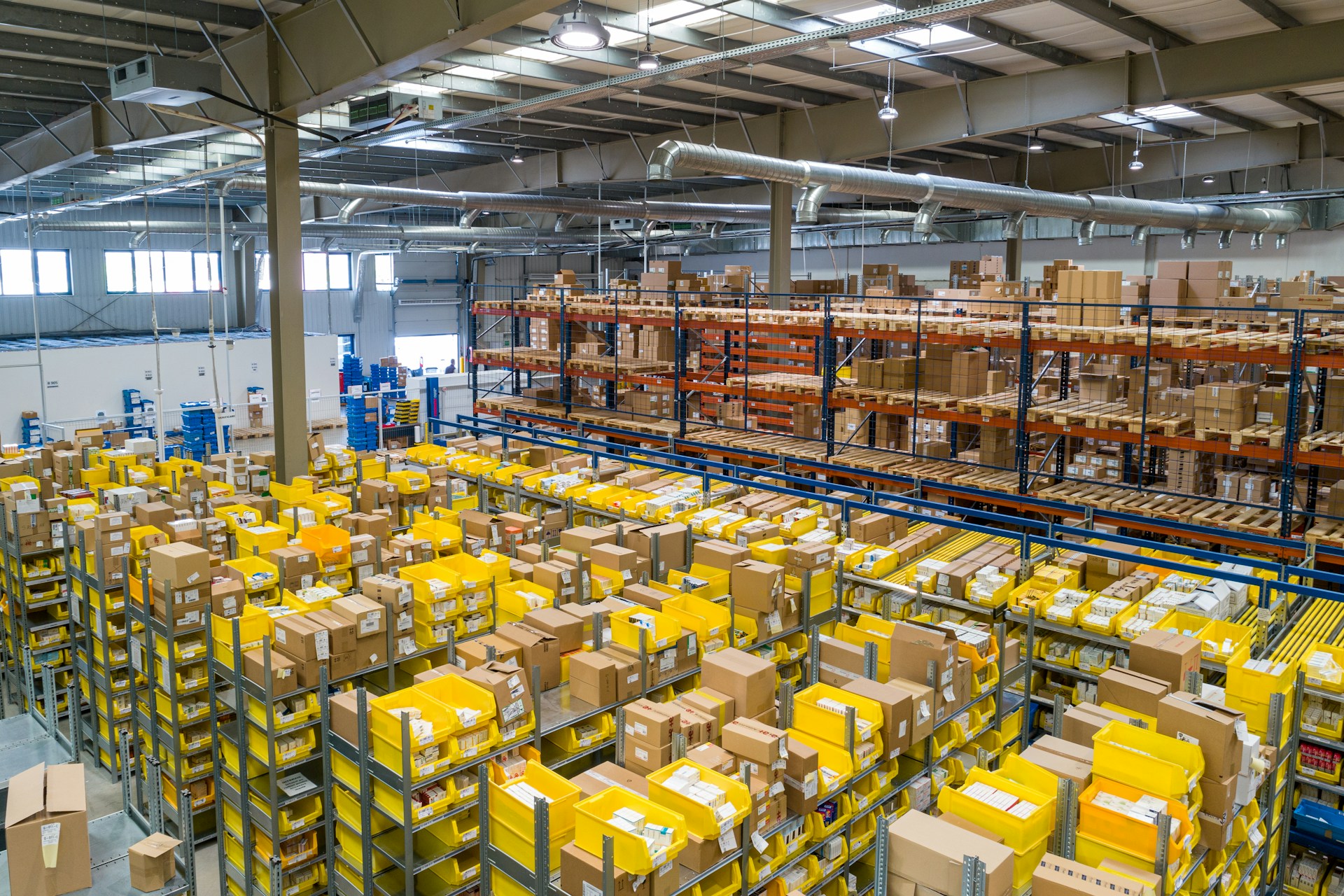
A fulfillment center is the complete opposite. It’s dynamic. At FlexSpace Logistics, we treat these facilities as high-velocity hubs rather than simple depots. The objective flips. The goal isn't to keep inventory; it is to get it out the door. While extensive shelving is obviously part of the layout, every square foot is optimized for picking, packing, and shipping individual orders the moment they arrive. You can feel the difference in energy immediately.
In a standard warehouse, silence is common. A carrier might stop by just once or twice a week to collect a large, palletized shipment. Compare that to a fulfillment environment. The floor is alive with movement. We see pickers navigating aisles to grab specific SKUs (often at a rapid pace), packers assembling boxes, and carriers like UPS or FedEx arriving multiple times a day to handle the throughput.
Grasping this distinction matters. It dictates how you manage your stock levels. But knowing the difference is just the start; you also need to understand the actual mechanics of how an order travels through this high-speed system.
How the Fulfillment Process Works Step-by-Step
The lifecycle of an order actually begins long before a customer visits your site. It starts at the receiving dock. We inspect incoming freight, check for damages, and log everything into the Warehouse Management System (WMS).
Accuracy is everything here. If the count is off now, it stays off. Then comes slotting. We don't simply look for empty shelf space; we organize inventory based on sales velocity. Fast-moving SKUs live near the packing stations. This minimizes walking time and speeds up processing significantly.
Once an order drops, picking begins. Staff members locate the items and bring them to the packing station. Here, the focus shifts to protection. We select the right box size and dunnage to ensure the product survives the journey without incurring unnecessary dimensional weight costs.
Shipping is the handoff. Carriers collect the ready parcels, often utilizing bulk rates that stand-alone businesses struggle to access. But the chain doesn't always end at the customer's doorstep.
Reverse logistics, or returns management, is the final piece. We inspect sent-back items to determine if they should return to inventory or be discarded. Handling this efficiently keeps your stock levels accurate and your customers happy.
You can see the mechanics are complex. However, the real value lies in what this operational efficiency does for your broader business strategy.
Strategic Benefits of Using Professional Fulfillment Services
Running a growing brand involves a constant trade-off between scaling up and getting bogged down. At FlexSpace Logistics, we argue that logistics shouldn't be the bottleneck that throttles your sales.
Consider seasonality. If you manage your own facility, you are forced to lease enough square footage to handle your peak season (like Q4). The reality is that for the rest of the year, you are paying for empty air. Our model converts those rigid fixed costs into flexible variable ones. You pay only for the shelf space and labor you actually use. It expands when you boom. Then it contracts when things quiet down.
Speed is another major piece of the puzzle. Two-day delivery isn't really a perk anymore. It is a baseline expectation. But meeting that standard consistently requires optimized picking paths and sophisticated technology (things that are hard to build from scratch). We use our established infrastructure to hit those windows automatically, helping you compete directly with the retail giants. And let's not forget the money. By aggregating volume across our entire client base, we secure bulk rates with carriers that a standalone business simply cannot access. Those savings go a long way toward protecting your margins.
Beyond the financials, the most critical advantage is how you distribute your energy. Think about the trade-off. Every hour you spend taping up boxes is an hour stolen from marketing strategies or new product development. Your expertise lies in building a brand. Not managing a warehouse floor. That said, you might be asking yourself if your current volume justifies making the switch just yet.
Signs Your Business Needs to Outsource Fulfillment
Deciding when a company should use a fulfillment center is rarely about hitting a specific number of orders per month. It is about operational friction. If your growth is starting to cause pain rather than excitement, that is usually the first signal.
Watch for these specific indicators.
The shipping backlog. If orders placed on Monday are still sitting on the packing table on Wednesday, you have a bottleneck. Customers expect speed. Your internal capacity limits shouldn't cap your sales potential or force you to work weekends just to catch up.
Your office is for working, not stacking boxes. We see this often. Inventory creeps into hallways, break rooms, or even personal garages. When you physically run out of room to organize products efficiently, picking times slow down and frustration goes up.
Mistakes are happening. Are you selling items you don't actually have? Or sending the wrong SKU? These errors damage your reputation fast. A dedicated warehouse management system fixes this immediately.
Customer complaints. If your support team spends all day apologizing for late deliveries, it’s time to make a change.
Identifying the warning signs is step one. But finding a provider who can actually solve them is the next challenge.
Choosing the Right Logistics Partner for Your Growth
Not all warehouses are built the same. You need a partner that fits your specific blueprint, rather than a rigid box you are forced to squeeze into. Technology is usually the first hurdle. Your fulfillment partner has to connect with your sales channels without friction. Manual data entry belongs in the past.
Then consider geography. We often see businesses get fixated on the cost of the shelf itself. It seems logical. But shipping zones are where your margins actually disappear. Positioning inventory closer to your customers reduces transit times. It creates a better experience for them. And lower costs for you.
Finally, demand flexibility. Long-term leases can strangle a growing company. At FlexSpace Logistics, we prioritize adaptable terms that scale up or down as your volume changes. You shouldn't have to pay for empty space during slow seasons.
With the right partner in place, the dynamic changes. The focus shifts from daily survival to long-term strategy.
Optimizing Your Supply Chain for Future Success
Transitioning from a garage or backroom to a dedicated fulfillment warehouse marks a pivotal moment in your company's journey. It signals that you are finally ready to prioritize scale over manual labor.
But timing is everything. Waiting until shipping errors pile up puts the customer loyalty you worked so hard to build at risk. Proactive changes protect your brand reputation.
At FlexSpace Logistics, we have seen how the right infrastructure transforms operations from a bottleneck into a competitive advantage. Take a hard look at your current setup. Really look. If the logistics grind is slowing you down, it might be time to talk. We are ready when you are.