Standard freight shipping works for most loads. But when your cargo is oversized, unusually heavy, fragile, or temperature-sensitive, a standard dry van simply isn't enough. That's when specialized trucking becomes the only practical option — and choosing the right solution protects both your cargo and your timeline.
This guide covers what specialized trucking means, which freight types require it, what equipment is involved, and how Canadian businesses can find the right solution for non-standard loads.
What is Specialized Trucking
Specialized trucking refers to freight transportation services designed for cargo that falls outside the scope of standard shipping. These are shipments that can't move safely or legally in a conventional trailer because of their size, weight, shape, fragility, or handling requirements.
The cargo types that require specialized trucking are varied. Heavy construction equipment, industrial machinery, aerospace components, refrigerated pharmaceuticals, and oversized structural materials all fall into this category. What they share is the need for custom equipment, trained operators, and often additional planning around permits and routing.
Specialized trucking is a core part of how Canadian industries — manufacturing, construction, agriculture, healthcare, and energy — keep their supply chains moving when standard options can't do the job.
How is Specialized Trucking Different from Standard Freight
Standard freight uses dry van trailers designed for general cargo — palletized goods, packaged products, and consumer freight that fits within conventional size and weight limits.
Specialized trucking uses purpose-built equipment matched to the specific demands of the cargo. That might mean a flatbed for oversized machinery, a refrigerated trailer for temperature-controlled goods, or a lowboy for equipment that can't be loaded at standard trailer height.
The difference isn't just equipment. Specialized freight often involves:
- Route planning around weight limits and bridge restrictions
- Oversize or overweight permits from provincial and federal authorities
- Escort vehicles for loads that exceed road width regulations
- Customized loading and securing protocols for fragile or irregular cargo
- Drivers trained specifically for the equipment type and cargo category
When any of these factors are in play, standard freight carriers can't legally or safely complete the move.
Types of Specialized Trucking and When You Need Them
Not all specialized trucking is the same. The right equipment depends on the specific characteristics of your cargo. Here's a breakdown of the most common categories and what each one is designed for.
Flatbed Trucking for Oversized and Irregular Loads
Flatbed trailers are the most widely used specialized equipment in Canada. They're open-deck trailers with no sides or roof, which makes them the right choice for cargo that can't be enclosed — heavy machinery, steel beams, lumber, construction materials, and large industrial components.
Because there are no walls or ceiling, flatbeds can accommodate oversized loads and allow for side or top loading. Cargo is secured with straps, chains, and tarps depending on the material.
Flatbeds are the go-to for:
- Construction equipment and heavy machinery
- Steel, lumber, and structural materials
- Agricultural equipment
- Large industrial parts that exceed dry van dimensions
When your cargo is too wide, too tall, or too irregularly shaped for an enclosed trailer, a flatbed is usually the first option to consider.
Refrigerated Trucking for Temperature-Sensitive Freight
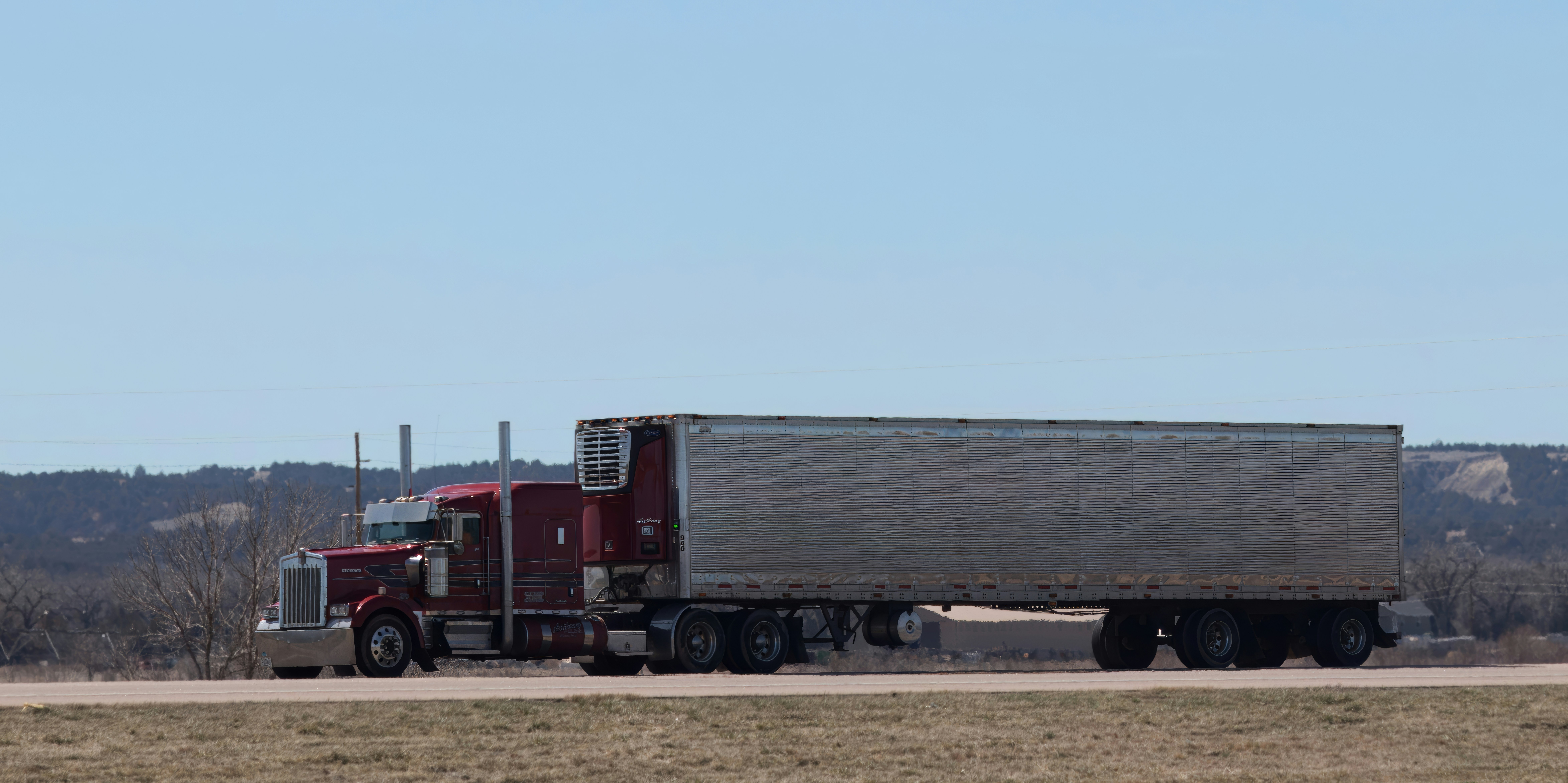
Reefer trucks — refrigerated trailers — are designed to maintain a consistent internal temperature throughout transit. They're used for any cargo where temperature fluctuation would cause spoilage, damage, or non-compliance with health and safety regulations.
This covers a wide range of industries. Food and beverage companies rely on reefers for perishables. Pharmaceutical distributors use them for vaccines and biologics. Chemical manufacturers use them for temperature-sensitive compounds.
Key characteristics of refrigerated trucking:
- Maintains temperatures from below freezing to climate-controlled warm
- Continuous monitoring throughout transit
- Complies with food safety and pharmaceutical transport regulations
- Available for both short-distance and long-haul routes across Canada
If your product has a temperature window it must stay within from pickup to delivery, refrigerated trucking is not optional — it's a compliance requirement.
Heavy Haul Trucking for Exceptional Loads
Heavy haul trucking handles cargo that exceeds the standard legal weight limits for road transport. These loads often require multi-axle trailers, additional engineering review, and routing plans that account for bridge weight ratings and road conditions.
Lowboy trailers and extendable trailers are common equipment types in this category. They sit lower to the ground to accommodate tall equipment, and their axle configurations distribute weight to stay within per-axle legal limits.
Industries that regularly use heavy haul specialized trucking include:
- Mining and resource extraction
- Energy and utilities (transformers, turbine components)
- Large-scale construction (cranes, excavators, structural steel)
- Manufacturing plants moving production equipment
Every heavy haul move requires advance coordination with transportation authorities and, in many cases, pilot vehicles to ensure safe passage on Canadian roads and highways.
Step Deck and Lowboy Trailers for Tall Cargo
Step deck trailers — also called drop decks — have a lower deck section that creates additional height clearance for tall freight. This makes them the right fit for cargo that's too tall for a standard flatbed but doesn't require the full setup of a heavy haul configuration.
Lowboy trailers take this further, with an extremely low deck height designed for the tallest and heaviest equipment
These trailer types are used when standard height restrictions would otherwise prevent the move — without requiring a full oversize load permit in every case.
Specialized Trucking in Canada — What Businesses Need to Know
Specialized trucking in Canada operates within a framework of federal and provincial regulations that govern what can move on public roads, at what size and weight, and with what permits. Understanding this framework is important for any business shipping non-standard freight.
Canada's road system is managed across provincial jurisdictions, which means permit requirements vary by province. A load moving from Ontario into Quebec may require separate permits for each leg of the journey. Oversize loads — those exceeding standard width, height, or length limits — require advance permits and often time-restricted travel windows to avoid high-traffic periods.
Weight regulations also vary. Provincial road authorities set limits on axle weights and gross vehicle weights, and these limits are enforced strictly. A specialized trucking carrier managing your freight needs to understand these requirements for every route your cargo travels.
For businesses shipping across the GTA, through Ontario, or moving freight into western or eastern Canada, working with a specialized trucking partner who handles permitting and route compliance removes the regulatory burden from your team. It also prevents costly delays from loads that aren't properly cleared before they get on the road.
Seasonal road restrictions add another layer. Spring weight limits — common across Ontario and other provinces — restrict heavy loads during the freeze-thaw period to prevent road damage. Experienced specialized trucking operators plan around these restrictions and can advise on the best timing for your shipment.
Which Industries Use Specialized Trucking Most Often
Specialized trucking supports a wide range of Canadian industries. The common thread across all of them is cargo that has characteristics a standard trailer simply can't accommodate.
Construction and Infrastructure
The construction industry is one of the heaviest users of specialized trucking in Canada. Every major project involves moving equipment, materials, and prefabricated components that exceed standard freight dimensions.
Excavators, cranes, structural steel sections, and pre-cast panels all require flatbed, step deck, or heavy haul solutions depending on size and weight. For active construction sites, timing is critical — delays in equipment delivery cascade directly into project schedules.
Manufacturing and Industrial
Manufacturers regularly ship large machinery, production equipment, and raw materials that don't fit standard trailers. A facility relocating equipment or shipping finished industrial products to a client often needs specialized transport at multiple supply chain points.
Healthcare and Pharmaceuticals
Temperature integrity is non-negotiable in healthcare logistics. Vaccines, biologics, and specialty pharmaceuticals require continuous cold chain management from origin to delivery. A single temperature excursion can render a shipment non-compliant and unusable.
Refrigerated specialized trucking is the standard for pharmaceutical distribution in Canada, with carriers responsible for both temperature maintenance and documentation throughout transit.
Energy and Utilities
Power generation equipment, wind turbine components, transformer units, and pipeline materials all require heavy haul or flatbed specialized trucking. These moves involve significant advance planning with provincial transport authorities.
How FlexSpace Logistics Handles Specialized Trucking
At FlexSpace Logistics, we move freight that doesn't fit the standard mold. Our specialized trucking services are built for businesses that need more than a dry van — cargo that's oversized, delicate, unusually heavy, or requires handling that general carriers aren't equipped to provide.
We work with each client to assess the specific requirements of their shipment before anything moves. That means reviewing dimensions and weight, confirming permit requirements, and mapping a route that keeps your cargo compliant and on schedule. Whether you're shipping heavy construction equipment across Ontario, moving temperature-sensitive freight through the GTA, or coordinating a long-haul oversized load anywhere in Canada, our team has the experience and equipment to get it done.
Our logistics services don't stop at specialized trucking. FlexSpace Logistics offers a full range of freight solutions — from LTL and FTL transportation to last-mile delivery and long-haul trucking — so your supply chain has one reliable partner from start to finish.
If your freight doesn't fit a standard trailer, we want to hear about it. Contact FlexSpace Logistics today and get a quote built around your specific cargo and route. We'll handle the complexity so you can focus on your business.

.jpg)